Thursday, October 14, 2010

Drawing Algorithms and Viewing

Scan converting lines

Basic incremental algorithm

One way for scan conversion of lines is to compute the slope m as dy/dx, to increment x by 1 starting with the leftmost point, to calculate yi = mxi + B for each xi, and intensify the pixel at (xi, Round(yi)), where Round(yi) = Floor(0.5 + yi). This computation selects the closest pixel. This approach can be improved by using dyi+1 = dyi + m (here dx = 1 for each incremental). The illustration is shown below:


To note: if the slope m < 1, the x, y should be reversed.

Midpoint line algorithm

We assume that the lines' slope m is between 0 and 1. For each point P, we observe the next midpoint M, if M lies above line, we choose E, otherwise we choose NE. If E is chosen, M is incremented by one step in the x direction, otherwise we increase M by one step in each direction. The illustration is shown below:


The line can be written as: y = (dy/dx) * x + B, therefore, F(x,y) = dy*x - dx*y + B = 0, F(x,y) is the slope-intercept function.

To apply the midpoint criterion, we need to computer F(M) = F(xp + 1, yp + 1/2), if F(M) <>

Scan converting circles

For circles, we can still use incremental algorithm or midpoint algorithm.


Antialiasing

We can find that the results from above algorithm are not so good in most case. To improve the picture quality we apply antialiasing.

Unweighted area sampling

In this technique, we set the pixel intensity proportional to the amount of area covered. The illustration is shown below:


Geometrical Transformations

Affine transformations

Affine transformations have the property of preserving parallelism of lines.

2D Affine transformations

Using homogeneous coordinates, the 2D affine transformations are, respectively,

Translation:

Rotation:


Scaling:


Shear(combination of Rotation and scaling):

Please note the above transformations we use a convention of post-multiplying by column vectors, while the convention of premultiplying by row vectors is used in other places. Matrices must be transposed to go from one convention to another:

(P * M)T = MT * PT

3D affine transformations

Translation:


Rotation:


Scaling:


Planar geometric projections

A thorough review can be found here.


Perspective Projections

Determined by Center of Project

Parallel Projections

Determined by Direction of Projection

Image Courtesy of Brown University

Orthographic projections

Top, Front, Side

Image Courtesy of Brown University

Axonometric (projection plane is not parallel to any of the coordinates planes. For isometric projection, angles between all three principle axes are equal)
Image Courtesy of Brown University

Perspective Projection

Image courtesy of Brown University

Representing Curves and Surfaces

Polygon Meshes

Parametric cubic curves

x(t) = axt3 + bxt2 + cxt + dx,

y(t) = ayt3 + byt2 + cyt + dy,

z(t) = azt3 + bzt2 + czt + dz, 0 ≤ t ≤ 1

Hermite Curves

Bézier Curves

Uniform Non rational B-Splines

Non Uniform Non Rational B-Splines

Non Uniform Rational B-Splines (NURBS)

Parametric Bi-cubic Surfaces

Hermite surfaces

Bézier Surfaces

B-Spline Surfaces

What are special effects?

Special effects (SFX) are used in many forms of entertainment such as movies and TV shows to create a more realistic and convincing atmosphere.

They are used to portray something that is not possible in today's world - such as the reality of non-existent creatures, or space travel in distant galaxies. They are also used as a matter of convenience when the cost of portraying an image may be too expensive, or too inconvenient - such as creating a five-minute scene on the top of Mt. Everest. Special effects may also be used in order to enhance or augment the quality of an image to create a more realistic experience for the viewer.

There are many forms of special effects that have developed over the years. Special effects include the flying image of Peter Pan hanging from a wire in a live-play, gruesome costumes of monsters, and even characters in movies that are completely computer generated.

Some basic forms of special effects include:

On-Stage Techniques

These are techniques that take place on the stage are taken for granted today. Examples include an object on the stage of a live-play functioning when it should not be - such as the sound of a hair dryer or toilet flushing. Another example of this are background paintings, which give the impression that an actor is somewhere he is not; again, this is more common on live stage plays.

Filming Techniques

Some of these techniques include matte paintings which create a foreground painted on a piece of glass that the camera films through. Also, miniature effects are created by using a small scale model that the viewer is unaware of.

Outward Appearance

The most basic of outward appearances is the costume - this is a basic of anything in the entertainment industry. More advanced versions of this include modern prosthetic makeup. Prosthetic makeup is used by creating a mold of a body part (usually the face) and molding it into whatever the artist chooses. This can create amazing appearances of wounds, or non-human features.

Blue Screen

The blue screen is a technique that is used by having the actor stand in front of a solid colored blue screen, which is later replaced by the preferred scene. This is often used when the actual background cannot be achieved (due to expensive costs, non-existent realms, etc). With the advent of the digital age, this process has been greatly improved.

Wire Removal

Wire removal is often used to create the sensation of a flying actor. The actor is placed in front of a blue screen, and later the wire is digitally erased frame by frame before finally adding in the preferred background. In this way, the viewer will not see the wire holding the actor.

Computer Graphics

Now the most prominent of special effects, computer generated images (CGI) are created on a computer through models, hand-drawings, or a filmed scene with live actors. With CGI, artists are able to create a variety of images, experiment with ease, and create movements and interactions that require much less effort and time.

Maze complexity and aesthetics: deep problems in computer graphics


Craig S. Kaplan is an Assistant Professor at the Computer Graphics Lab, The David R. Cheriton School of Computer Science, University of Waterloo, Ontario, Canada. Studying the use of computer graphics in the creation of geometric art and ornament, Professor Kaplan's interests extend into non-photorealistic rendering.

I happen know at least two high-end software engineers fighting similar research area and aware of some of its complexities and difficulties. Yet, Professor Kaplan's Maze Design is certainly one of the most spectacular amazing presentations of discrete geometry and non-photorealistic rendering techniques I have ever seen.

Creating computer generated mazes using human designer input, Professor Kaplan and his PhD student, Jie Xu, were interested in two complementary questions with respect to maze design: Complexity and Aesthetics. According to Kaplan computer-based maze design requires a mix of techniques from discrete geometry and non-photorealistic rendering. Thus, the two questions of complexity and aesthetics in mazes both represent profound problems in computer graphics.

Kaplan and Jie Xu were trying to answer the following questions:

Complexity

"What makes a maze difficult to solve? The more we consider this question, the more elusive it becomes. It's certainly possible to begin defining mathematical measures of a maze's complexity, but complexity must depend on aspects of human perception as well. For example, the eye can easily become lost in a set of parallel passages. Complexity also depends on how the maze is to be solved. Are you looking down on the maze, solving it by eye? With a pencil? What if you're walking around inside the maze? And of course, complexity isn't necessarily what we want to measure. Ultimately we'd like to generate compelling puzzles, which may or may not have a high degree of complexity."

Aesthetics

"How do we construct attractive mazes, particularly mazes that resemble real-world scenes? Here, maze design interacts with problems in non-photorealistic rendering. There are many great projects for producing line drawings from images. Our goal is similar, except that our lines must also contrive to have the geometry of a maze. This additional constraint affects how we think about creating a line drawing in the first place."

Also according to their page, mazes can be used to represent images in two different ways with the most obvious using non-photorealistic line art as in the fantastic examples by Christopher Berg and the less obvious as in the "great new Maze-a-pix puzzles being produced by Conceptis Puzzles".

Following are a few of those creations linked to their corresponding HUGE originals. Click on any of them to download a PDF or PNG of the maze from their website for solving on paper. If you are REALLY interested with the subject you can also download the full Vortex Maze Construction paper by Jie Xu and Craig S. Kaplan (be patient. it's a big one and might take time to download).

Note: All images are courtesy of and copyrighted (2005) by Jie Xu and Craig S. Kaplan. you are free to use any of the images for personal and non-commercial purposes but please check with the owners about any other uses.


Maze complexity and aesthetics: deep problems in computer graphics


Craig S. Kaplan is an Assistant Professor at the Computer Graphics Lab, The David R. Cheriton School of Computer Science, University of Waterloo, Ontario, Canada. Studying the use of computer graphics in the creation of geometric art and ornament, Professor Kaplan's interests extend into non-photorealistic rendering.

I happen know at least two high-end software engineers fighting similar research area and aware of some of its complexities and difficulties. Yet, Professor Kaplan's Maze Design is certainly one of the most spectacular amazing presentations of discrete geometry and non-photorealistic rendering techniques I have ever seen.

Creating computer generated mazes using human designer input, Professor Kaplan and his PhD student, Jie Xu, were interested in two complementary questions with respect to maze design: Complexity and Aesthetics. According to Kaplan computer-based maze design requires a mix of techniques from discrete geometry and non-photorealistic rendering. Thus, the two questions of complexity and aesthetics in mazes both represent profound problems in computer graphics.

Kaplan and Jie Xu were trying to answer the following questions:

Complexity

"What makes a maze difficult to solve? The more we consider this question, the more elusive it becomes. It's certainly possible to begin defining mathematical measures of a maze's complexity, but complexity must depend on aspects of human perception as well. For example, the eye can easily become lost in a set of parallel passages. Complexity also depends on how the maze is to be solved. Are you looking down on the maze, solving it by eye? With a pencil? What if you're walking around inside the maze? And of course, complexity isn't necessarily what we want to measure. Ultimately we'd like to generate compelling puzzles, which may or may not have a high degree of complexity."

Aesthetics

"How do we construct attractive mazes, particularly mazes that resemble real-world scenes? Here, maze design interacts with problems in non-photorealistic rendering. There are many great projects for producing line drawings from images. Our goal is similar, except that our lines must also contrive to have the geometry of a maze. This additional constraint affects how we think about creating a line drawing in the first place."

Also according to their page, mazes can be used to represent images in two different ways with the most obvious using non-photorealistic line art as in the fantastic examples by Christopher Berg and the less obvious as in the "great new Maze-a-pix puzzles being produced by Conceptis Puzzles".

Following are a few of those creations linked to their corresponding HUGE originals. Click on any of them to download a PDF or PNG of the maze from their website for solving on paper. If you are REALLY interested with the subject you can also download the full Vortex Maze Construction paper by Jie Xu and Craig S. Kaplan (be patient. it's a big one and might take time to download).

Note: All images are courtesy of and copyrighted (2005) by Jie Xu and Craig S. Kaplan. you are free to use any of the images for personal and non-commercial purposes but please check with the owners about any other uses.


The Importance of Computer Graphic Design

By 2014, you can expect the graphic design job market to be one of the most sought after and fast growing. Graphic design, website design and computer animation design would be the focus of all these careers. Though there would be plenty of job opportunities, still the market would be highly competitive in the field of computer graphic design. The reasons are many. For becoming a computer graphic designer you need a four year college degree or a Bachelors Degree. Some technical jobs can be obtained if you complete a two years college degree or Associates Degree. Unless you get more education, you can not expect this type of career to progress. Formal education is a must, if you want to pursue this career.

Graphics

Nearly thirty percent of people involved in computer graphic profession work as freelancers. Nearly half of all freelancers hold regular jobs in either computer graphics or some computer related jobs.Freelancing is a viable option in this career as there is no dearth of demand for graphic designers from small firms who can not pay for the larger design firms.

Computer graphic design can offer you a variety of career options. The many career options you have include the print media like books, papers and periodicals, audio media like advertising or electronic media like films and TV. Not so much in terms of variety but you could expect a steady stream of work if you seek a career in a large or small specialist company. Or you may even decide to work as a freelancer in this profession.

In case you are keen to pursue this as a career, it is not enough to have a college degree, a burning ambition and a thorough knowledge of where you wish to go. Development of skills in using computer graphic software and other computer-related work is essential. You will also need to develop a portfolio, which is a collection of your best work. These portfolios are often the deciding factor on who gets a job and who is still waiting to start their career!

Once you have completed your education and you know where you are going, the next step in your pursuit of a career is to find that first, entry level job. Computer graphic design jobs can be found at various places. Similarly, freelance jobs could be found through online job boards, classified ads as well as job for hire boards. Work-for-hire boards are better for the designing profession than other careers. Warm wishes and best of luck as you pursue your dream graphic design career.

Computer Graphics

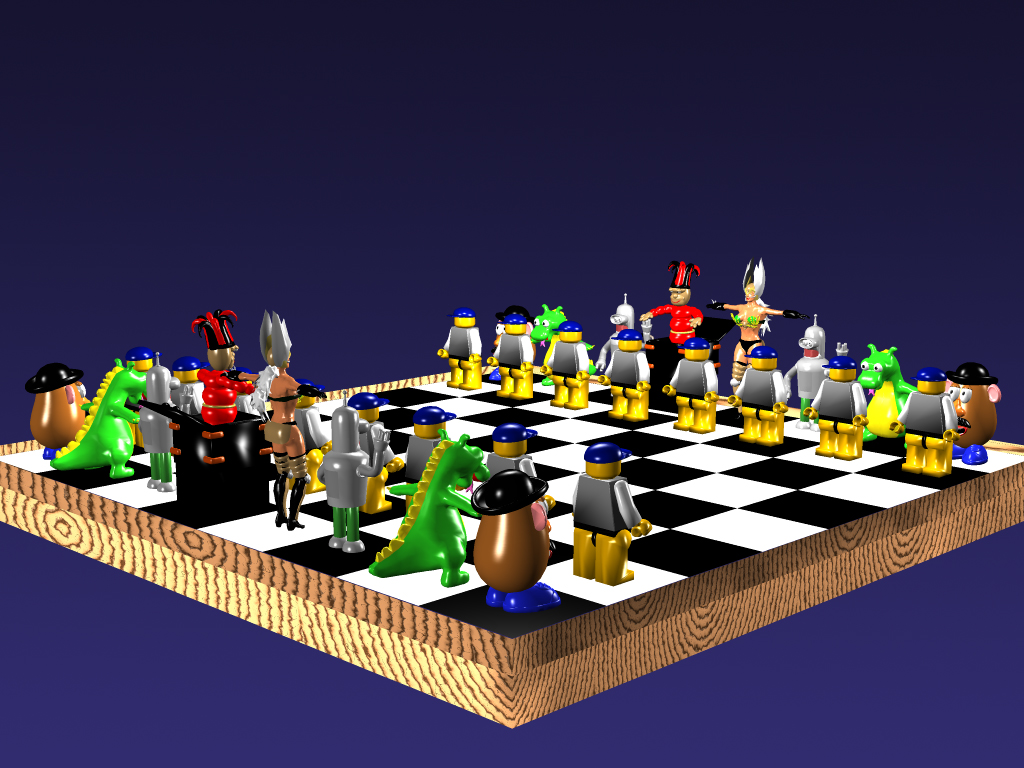
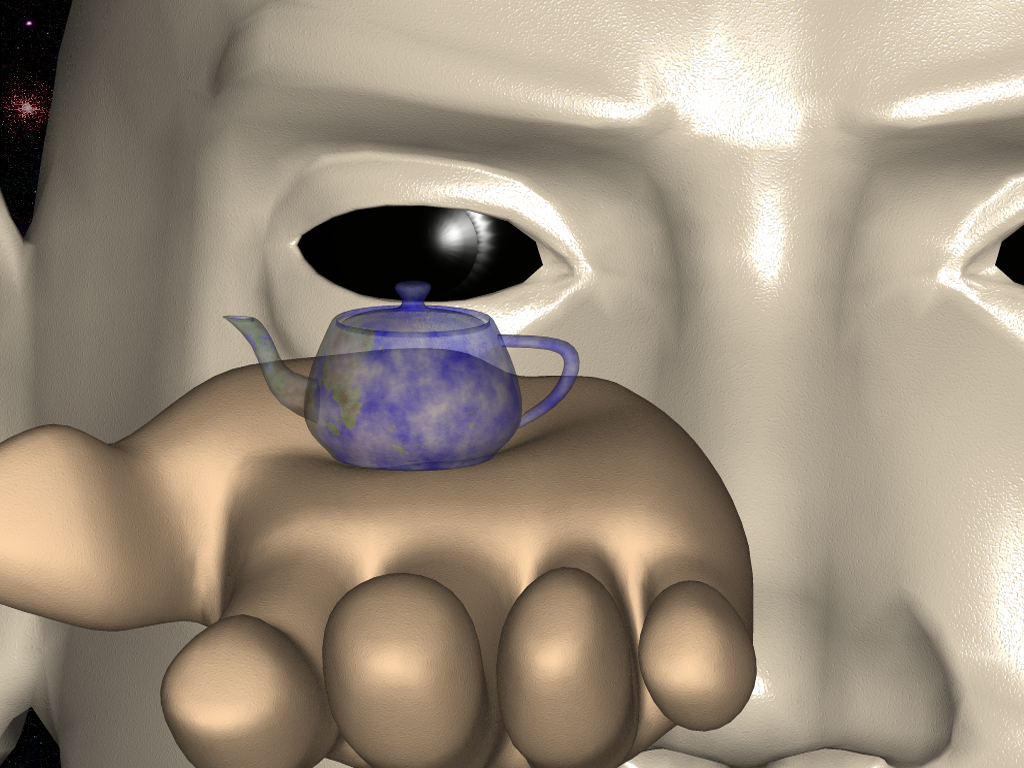
A rendering application and engine written from scratch by me and my partner, Dov Sheinker, produced the following images. The images have won second place in a student competition.

Chess story
Chess Story


Creator
Creator

Decoupling of data into meaningful componentsDecoupling of data into meaningful components

Computer graphics involves the manipulation of a variety of signals or data such as images, incoming light or three-dimensional objects. We want to develop processing tools to decouple these data into meaningful components that facilitate further processing and interactive manipulation.

For example, we have shown that the decoupling of an image into components that are similar to incoming light and albedo allows for powerful interactive relighting tools or pictorial tonal management. In these contributions, the decoupling is inspired from the Retinex theory, and decomposes the images into a large-scale component that is assumed to contain the illumination variation, and a small-scale component that represents the albedo. While this decoupling is not physically accurate, it yields very powerful tools for manipulation for the following reasons:

  • It is not used for vision inference but is modified and recombined to create an image that is similar to the original.
  • It is related to the human visual system and exploits some of its limitations or features.

Recently, we have extended the bilateral filter to handle polygonal meshes. In this context, the definition of the filter is not as straightforward because signal and location are conflated. We use a first-order predictor to decouples the signal and the spatial location in a surface. Because first-order properties such as normals are noisy, we use mollification (pre-smoothing of the normals) to obtain more reliable detection of outliers and features.